 uality Duck
How to safely build trust in AI generated code
Engineering leaders are sprinting to hand their developers AI tools. They are hoping to inject a shot of pure adrenaline into their delivery pipelines. The pitch is enticing: Generate code at the speed of thought. Shrink your backlogs overnight. But if your strategy is letting an AI spit out thousands of lines of code, you aren’t accelerating. You’re just building a bigger, heavier bottleneck further down the line.
You’re rolling out AI-assisted engineering wrong, and it’s going to slow you down.
The Pull Request Flood Gates
Think about your current delivery pipeline. In a modern high-autonomy team, the true constraint isn’t how fast a developer can type syntax; it’s how quickly a team can build confidence in a change, safely review it, and ship it.
When you introduce AI code generation directly into application features on day one, you trigger an immediate surge in code volume. Suddenly, junior developers are opening massive Pull Requests containing intricate, AI-generated boilerplate.
But who is checking that code? Humans. Your engineering team loves reviewing big pull requests, right?
“A 900-line PR cannot be reviewed in 15 minutes, it can only be approved in 15 minutes. Those aren’t the same thing.”
— Gergely Orosz
“Past 100 lines, reviewers start skimming. Past 500, they stop caring entirely.”
— Sanchit Narula
“The quality and value of code review feedback decrease with the size of the change.”
— Dr. Michaela Greiler
The immediate result is a catastrophic cognitive overload for your peer reviewers.

Instead of doing deep-dive peer reviews, asking architectural questions, seeking to really understand the change and ship real value, your senior engineers are drowning. They get fatigued, they start skim-reading, and the human safety net collapses.
The illusion of speed
And this is exactly where the illusion of AI speed falls apart and actually starts slowing you down. Because your engineers don’t yet trust the AI, they approach every single line of that massive PR with intense skepticism. A review that used to take ten minutes now takes forty because the human reviewer feels forced to painstakingly audit the robot’s logic. Paranoia creeps into the rest of the cycle, too, teams end up expanding their testing scopes and spending way more time validating changes because nobody wants to be responsible for letting an AI-generated bug slip through to production.
You haven’t improved Developer Experience, or velocity; you’ve just created a high-friction environment where human reviewers are tasked with policing a hyperactive robot, paying a massive “trust tax” at every single gate.
Flip the Script: Review Before You Generate
If you want to scale engineering impact properly, you have to build confidence in the tools first. The best way to do this isn’t starting with AI-assisted engineering, because it doesn’t scale alone, it needs a supporting framework. It needs AI-assisted code review that your engineers actually trust!
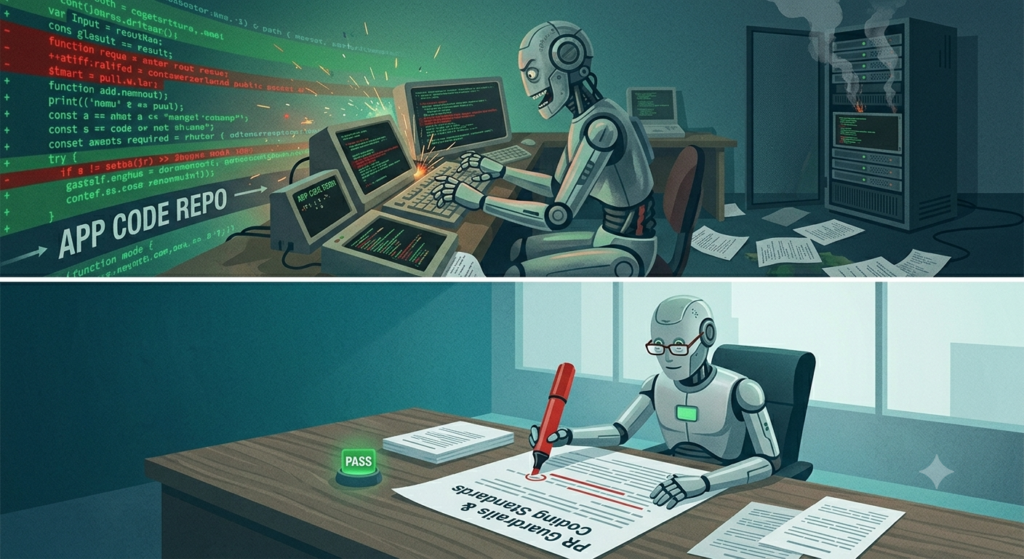
Before you drown in AI generated code, you need to build not only the processes to review and test it, but also the trust in those processes. By implementing an AI-assisted code review tool, you can build that confidence alongside human review by letting the AI parse the human-written code, flag syntax inconsistencies, look for security vulnerabilities, and suggest optimisations that you can compare with the findings of the human review.
By starting with AI-assisted review, you achieve two critical wins:
- Fine-tune the reviewer: You can tweak your configuration, make sure it follows your coding standards, understands your linting rules,and has meaningful context. Establishing automated reviews that are senior quality.
- Build a foundation of trust: Your team likely won’t trust AI for reviews on day one, and that’s ok. By using AI-assisted code review tools alongside human review, and using what you learn to fine-tune it, engineers will develop trust in the tool’s ability to conduct useful, meaningful review.
Now that your engineers trust the AI’s feedback loop, and your automated review steps are thoroughly calibrated, now is the time to start writing code with AI. There will be another learning journey here about how to use AI-assisted engineering well, but now you have tooling in place you trust to review the code, we will learn faster and be less at risk of shipping poor quality code. When the volume of PRs inevitably increases, you’ll already have a trusted, optimised AI-assisted review process keeping the queue moving smoothly.
Accelerate the Scaffolding
While you are building that trust in the review layer, where should your developers actually use generative AI? We don’t want them writing production code, but we do want them to learn how to use tools for writing code with AI, so what should they be doing?
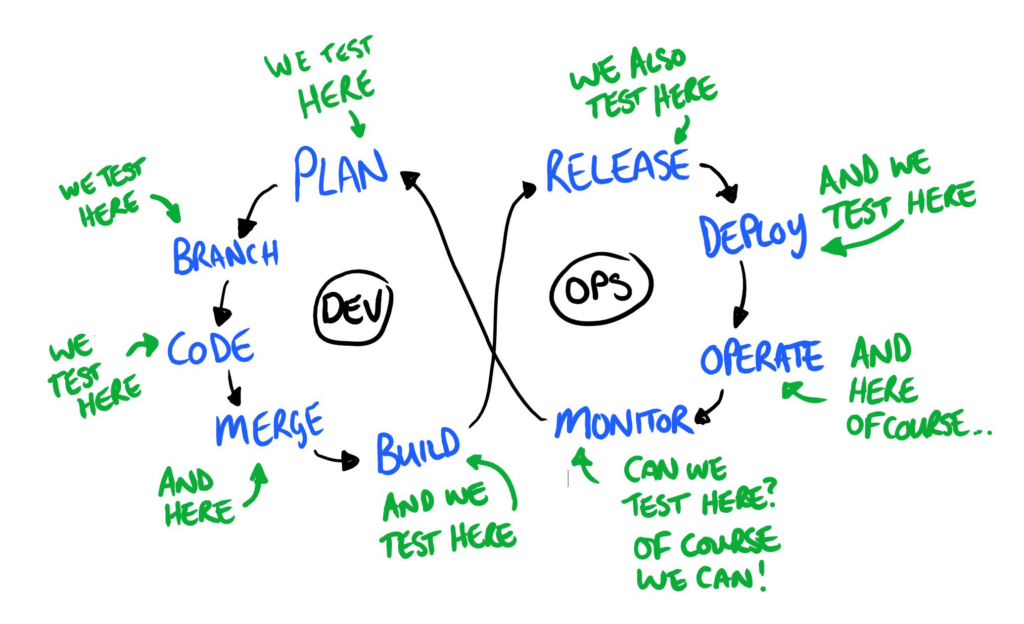
A good place to start is looking left, and right. Shift your AI efforts toward building the supporting infrastructure: CI/CD pipelines, internal tools, and test suites.
Writing robust GitHub Actions workflows, creating ephemeral test environments, or bootstrapping your automated tests are all fantastic accelerators that your team can use to learn how to utilise AI-assisted engineering tools well. It also provides massive value without risking the core codebase. It allows your teams to shrink their feedback loops and build a highly resilient delivery pipeline. By the time you’re ready to let AI generate application code, you’ll have a bulletproof, automated CI/CD process ready to catch issues.
Quality is the Foundation
The tagline of this blog is simple
Great software is a byproduct of great teams; excellent software rests on a foundation of quality
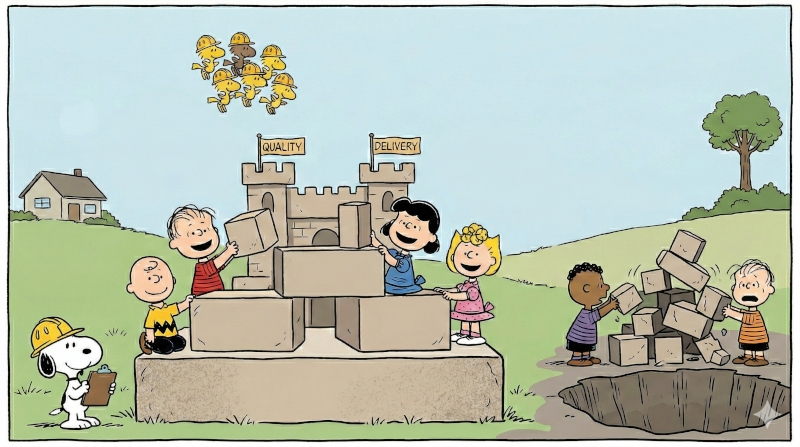
and in the age of AI, this has never been more true. For AI to accelerate your team, you need solid foundations, otherwise it’s just going to rush straight into the next bottleneck.
So before you try and accelerate your code generation, fix your review loop, automate your scaffolding, build trust in the guardrails, and then let the AI run.
Further reading
If you enjoyed this post then be sure to check out my other posts on Engineering Leadership.
Join the flock
Subscribe to get the latest posts on the messy reality of software delivery sent directly to your mailbox. I regularly share new thoughts on leadership and strategy —zero spam, just value.